Passkeys the Future of Authentication

Several years ago I had the opportunity to sit on the FIDO Alliance Board. While there we debated the future of authentication and commissioned the work to develop FIDO 2. I walked away from that experienced convinced that multi-factor authentication should and now could replace the insecure use of passwords without a second factor like the use of our secure thing [device, card, or dongle], or our unique biometric(s).

Recent my colleague Jeff and I have been trying to understand how the various enhancements to Webauthn, FIDO 2, and CTAP will allow users to use multiple devices without having to register each device with its unique public private key pair.

As a result of our conversations and research, it is clear a single provider such as Apple can within their proprietary environment enable the ability to access a Relying Party RP from multiple devices with each challenge authenticated with one Public Key.

Concepts like Keychains and the use of secure chains enabled via BLE, Cable or QR code are clear. Ideas like Signed Assertions often appear as tools capable of proving the device knows of the existence of the Private Key resident in the secure element of one of the user’s devices.

the FIDO alliance is focused on solving these challenges

Fake truths the result of the digital no mans land

It is so easy to write blasphemous Tweets, or conspiracy nonsense. Our digital age has given those who cannot find love a channel to express anger and frustration. They expose their lack of empathy, and their inability to grasp the basic peace established Via love.

Tomorrow Immutability and Trustless is this what we want?

2 words immutability and trustless. 

Such big words. The idea something is once written can never be changed, altered, or deleted as well as elegant. Or that there is no need to worry about anything, what is presented simply is one instance of knowledge not until more than two can be found is there the possibility of trust. But if more than a few assemble and not sure then!

In a trustless environment, there is no single entity that has authority over the system, and consensus is achieved without participants having to know or trust anything but the system itself. A definition from one of the major institutions helping to establish this new.  New what?

https://academy.binance.com/en/glossary/trustless

It is the removal of relationships so they can be replaced by something, no someone new that is bothersome.  Words like usury invade reality, and a few get very wealthy as the mass spend to survive, always being driven to need more. 

We have lost the ability to commune.  We lost track if the responsibility to be good stewards of the garden we were given responsibility for .

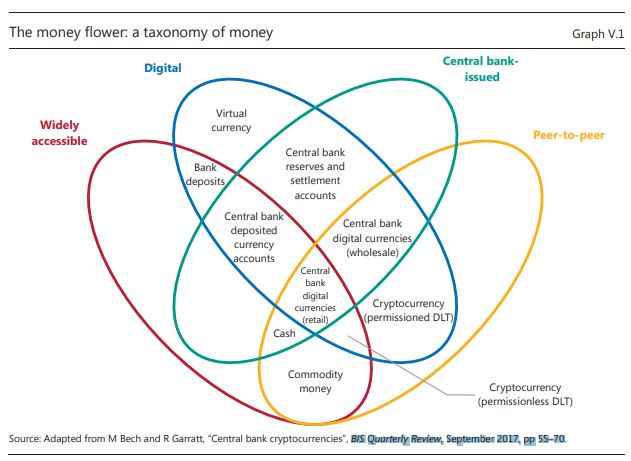
Central Bank Digital Currency – Someday Soon

https://modernconsensus.com/technology/building-digital-dollar-requires-private-sectors-help-fed-chairman/
Clearly, I am a bit behind.

Van Buren v United States

Date & Time:
Tuesday, June 29th, 2021
10:30 AM PT | 1:30 PM ET

Explained: A Legal Perspective on the Future of Cybersecurity Research

The Supreme Court’s Van Buren decision earlier this month aimed to clarify the ambiguous meaning of “exceeding authorized access” in the Computer Fraud and Abuse Act, the federal computer crime law.
In the context of protecting critical infrastructure from hackers, this particular ruling will define how we manage, report, and handle unauthorized access.
It also raises some foundational questions that, if weighed carefully, have the potential to foster a collaborative relationship between researchers and companies. How should good-faith researchers conduct themselves? Does this redefine the relationship between companies and hackers? Is every researcher considered to be in violation of CFAA if they’ve not sought permission to access a system?
Jared L. Hubbard and Christopher Hart have followed this ruling closely and worked on amicus briefs to aid the Court in this matter. They will discuss the case and answer questions.

Speakers:

Jared L. Hubbard, Partner, Fitch LP
Christopher Escobedo Hart, Partner, Co-Chair, Privacy & Data Security Practice – Boston, FoleyHoag LLP


Register on Eventbrite


Follow us on Twitter and LinkedIn to stay in the loop with updates!
Copyright © 2021 Voatz. All rights reserved.

Digital Identity and Authentic Relationships

When we think of investing in various businesses the goal, of course, is revenue. One of the keys to such success is loyalty. Loyalty is all about the relationship companies create with their customers and the revenue these relationships assure.

If the buyer has something the seller wants, in exchange for the good or service they desire, then a transaction occurs. The challenge is simple, each party defines the value of what they are providing or exchanging and presto the trade occurs.

When society grows and the complexity of what each of us produces and when our needs are not aligned to this process called barter, a means of monetization is established. Society creates a trusted means of exchange – pebbles, coins, money, a promissory note or now even, some would argue, cryptocurrencies.

In other words, society created an answer to enable the exchange of goods and services between parties, who do not have the goods and services the other party seeks.

With cash, coins or other tangible representations of value, commerce is easy. When society does not develop a secure and trusted means of facilitating the exchange of things commerce, innovation and a good life cannot be achieved. To this end, paper money is imbued with ‘value’ based on the integrity of the party issuing the physical or now electronic ‘money’. The addition of the word ‘electronic’ brings technology, computers, and networks into the conversation. One network, typically referred to as the Automated Clearing House ‘ACH’ allows banks to electronic instruct the movement of ‘money from an account at one bank to an account at another.

The addition of the word ‘electronic’ brings technology, computers, and networks into the conversation. One network, typically referred to as the Automated Clearing House ‘ACH’ allows banks to electronic instruct the movement of ‘money from an account at one bank to an account at another. The use of an ach check processing system for business transactions between vendors and customers has become increasingly common in addition to banks. The advantage of this system is that it usually allows businesses to transfer money automatically between bank accounts so that their payments can be cleared out in a short period of time.

In the 1958 Bank of America created Visa Inc., in 1964 the Wallenberg family created Eurocard, and then in 1966 a collection of banks banded together to create the Interbank Card Association, Mastercharge and now MasterCard.

These payment networks, by necessity, add complexity. They create the need to establish a two sided market. On one side the relationship with the buyer, consumer, or cardholder. On the other side if this market the seller, merchant, or retailer.

Issuance and Acceptance. Two words to describe the two sides of a network. It’s only when the two sides of the market have sufficient participants. Only at the tipping point, when critical mass exists, can one claim to have created a self-sustaining network. A network of people promoting use to buyers and a network of merchants willing to accept payment based on the terms and conditions defined by the network. Beginning at this tipping point, the network and it’s Brand blossoms. If either side of the market does not achieve critical mass, the network collapses.

Relationships – The oil of commerce

Any two entities familiar and trusting in the Brand, or each other, can easily establish a temporary relationship with entities associated with the brand. If one or more of the entities require anonymity increases the level of trust and recognition the Brand must establish with these participants.

In a digital environment, we are in need of mechanisms to share and establish trust across trillions of electrons. The two sides of a relationship, in other words, the market, will not take the time to understand or appreciate the need for network and endpoint security; until the risk exceeds a threshold understood by the participants.

The Artifact of Trust

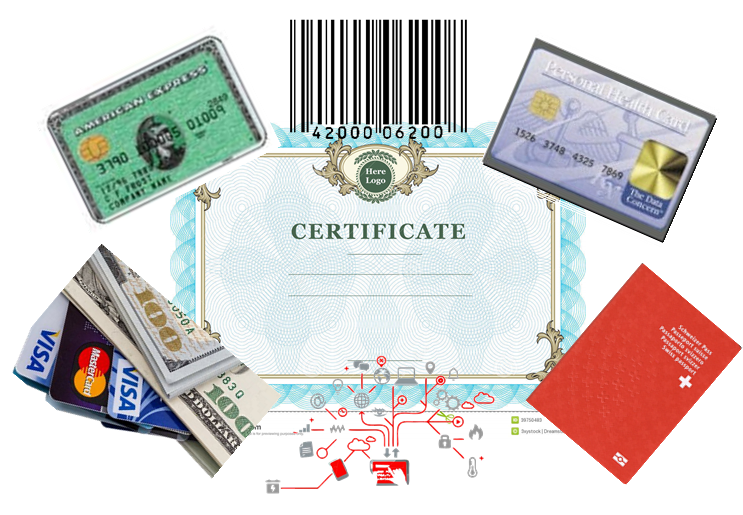
When a mutually trusted set of parties gives the citizen, consumer, employee or courtier a letter, card, device or any uniquely registered object, and provides every acceptor with a reader capable of recognizing the trusted thing. Then the two parties are in a position to establish “trust”. The consumer has a thing which is recognized and trusted by the acceptor. This is often referred to as “What You Have”.

Once the thing is recognized by the acceptor, then, the process of identification and authorizations (the transaction) can take place. The object – the artifact – carries an identifier. It possesses unique characteristics. The object also possesses a means of assuring the acceptor the presentation of that identifier represents a unique representation of that identifier.

The simplest artifact of establishing “trust” is a handheld thing, be it a key, fob, card, watch, pendant, phone, earpiece. It does not matter what it is, all that counts is that the merchant recognizes it and that the consumer is willing to carry and present it.

Trust, for the merchant, means they can, according to defined procedures, recognize and authenticate the thing. They are then in a position to pursue a temporary and trusted relationship. What can be achieved during the time the relationship of trusted is bounded, is constrained by an additional layer. In this layer the consumer, the acceptor and any third parties address which the rights and privileges are to be granted or pursued. This is when the exchange, sale, conversation, tranaction, event or access is granted.

In the Digital world certificates replace so many things

What is a certificate? A certificate as defined by Merriam Webster

certificate noun

1: a document containing a certified statement especially as to the truth of something
specifically: a document certifying that one has fulfilled the requirements of and may practice in a field

2: something serving the same end as a certificate

3: a document evidencing ownership or debt

certificate verb

: to testify to or authorize by a certificate

When we designed the EMV specification we employed a cryptographic mechanism to assure the merchant and ultimately the issuer of the presence of a uniquely issued payment card.  The goal, address the weakness of the security features then present on a physical payment card.

For the merchant – a local mechanism capable of allowing the device – the point of sale to attest to the membership of that card to the family of cards issued under one of the Payment Network brands.

For the Issuer – a mechanism where the card signed transaction details the merchant would forward a digital certificate – the cryptogram – to the issuer for authentication.  This cryptogram included in the message sent to the issuer assured the issuer, the card they issued; was presented to the merchant as a means of payment, for the transaction.

What is a payment card? – It is a certificate, issued by a financial institution, designed to guarantee the merchant will be paid – if they follow the agreed payment brand rules.

What is a ticket? – It is a certificate, issued by the movie theater, or a designated vendor, granting access to some venue or event.

What is a license? – It is a certificate, issued by some authority identifying your right to be or the ability to do something.

In the digital world, certificates are strings of characters, such as 2FG%4T678&b23, created, using some mechanism, by an Authority.  The readers, of these characters, use the certificate to Authenticate the uniqueness and Authority associated with the presentation of this certificate by someone or thing to something or someone.


It is time to move to Multi-Factor Authentication built on a Restricted Operating Environment

Passwords should become a thing of the past. Here’s why

This morning one of my Google alerts found a blog coming from the World Economic Forum.  It reminds us of the inventor of the password Fernando Corbato.  In an interview with the Wall Street Journal, he said passwords have become “a nightmare”.

The open question is how do we solve for the nightmare of password management we have created that is both effortless and secure.

This article calls for private enterprise and our governments to find answers.  I hope in finding these answers capitalism and profit do not become the reason to act.  I hope social responsibility and community action drive all to find answers that are affordable, convenient, secure and more importantly consumer-friendly.

We Keep Talking About It, When Will We Solve For Identity in the Digital Space

This morning I read an article in the Financial Times The real story behind push payments fraud.  What is disturbing, the acceptance of fraud and the focus of bankers on adding fees (like Interchange) to help cover the cost of fraud.  This article speaks to Push Payments and how liability shifts from the merchant back to the Issuer and ultimately the consumer.  It makes reference to Pull Payments and the use of debit cards where the fraud liability, unless online, is the merchants’.

To address card payment fraud in the physical world the payment schemes developed EMV.  In the digital or eCommerce realm everyone accepted allowing the merchants to not attempt to authenticate the cardholder and simply ask the consumer to provide openly available data {cardholder name, PAN the account number, expiry date, and address details}; if they, the merchant, would accept liability for any fraud.

As the world moves to embrace “Faster Payments” and Real-Time Gross Settlement ‘RTGS’, instead of focusing on assuring the identity of the sender and the recipient; we assume fraud will occur.

Why not focus on solving the problem?  Solving for Digital Identity solves for Card Not Present fraud, RTGS fraud, Faster Payment fraud, and so much more.


Digital Identity and Multi-Factor Authentication, A Necessity in an Increasing Digital World

Last night November 8, 2018, Bryan Cave Leighton Paisner hosted the Atlanta Chapter of BayPay’s

Digital Identity and Multi-Factor Authentication,
A Necessity in an Increasing Digital World

The panel moderated by Philip Andreae, Principal at Philip Andreae & Associates included:

  • Clay Amerault, First Vice President, Digital Delivery Lead at SunTrust
  • Blair Cohen, Founder, Chief Evangelist & President at AuthenticID
  • Jennifer Singh, Innovation Specialist & Digital Identity Strategist at Thomson Reuters
  • John Dancu, CEO at IDology
  • Vivian van Zyl, Senior Product Architect at FIS

The panel focused on the need to address Digital Identity and Authentication with a clear focus on the user experience. The discussion considered the balance between friction and security. All of the panelist articulating the demand for convenience. The Audience questions which is it the desire, or is it the demand, of the American consumer.

All agreed, the key issue, as we move towards digital only relationships, is the challenge of Identity Proofing. The panel also reminded the audience to layer various techniques in order to recognize the presence of the right user and the need to incorporate various fraud mitigation strategies to manage risk and assure identification. In addition to that, it becomes important to have data trails and access history in place to determine and log all access to as well as use of information by employees of the organization or external parties. This can be considered a critical step in resolving any identity fraud or data theft issues that might occur within the company; partnering with trusted digital forensics teams can ensure that the right information is extracted and a proper case built against the attacker.

Some of the participants asked if we should start educating the consumer and help them to understand the balance between a frictionless experience and one where a degree of friction is a symbol of how the enterprise (relying party) demonstrates its concern for the consumer’s data and responsibility to protect the consumers assets and identity attributes.

The question of centralize biometric databases versus distributed biometric databases, reminded people of the reality, our data, attributes and identity is already available on the Dark Web. How we restore privacy and what will happen as the new GDPR regulations go into force in Europe, and as California moves to introduce its privacy legislation; requires each of us to watch carefully and be part of the move to restore the consumers’, OUR, right to the data that is us.
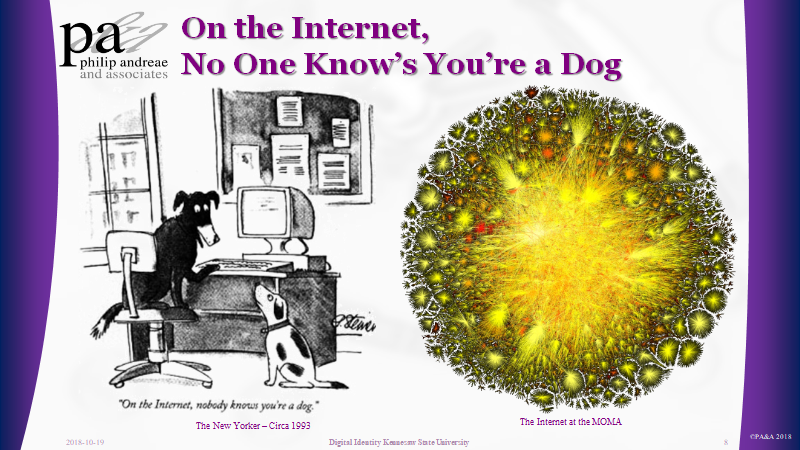
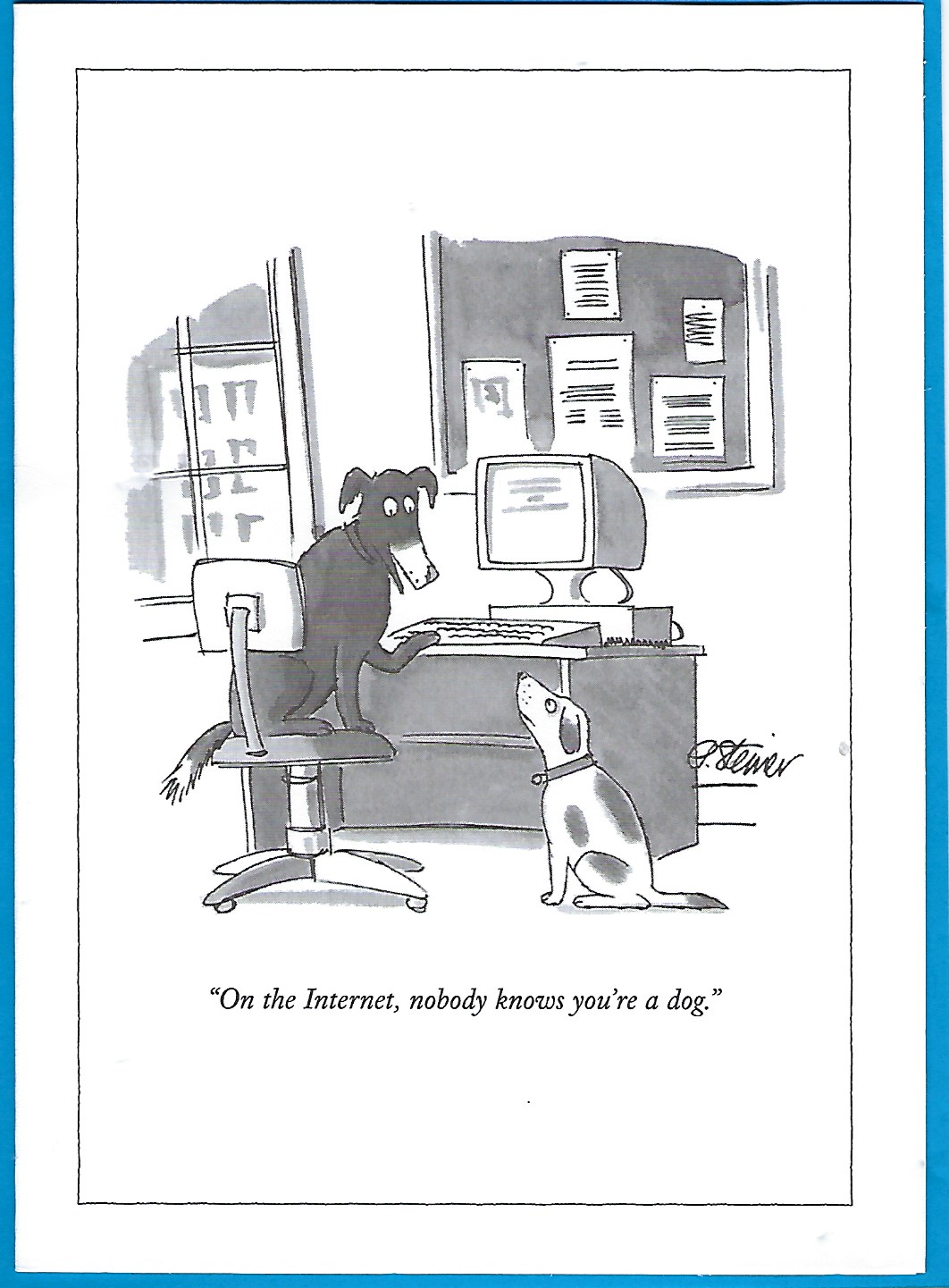
of Identity and Authentication in a Connected World of things.

Various engagement and conversations pull me into thinking about the realities and the necessities, of this emerging world of connected people, objects and thoughts.

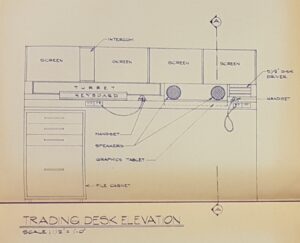
Looking back, this topic has been part of my life since 1982 when I was first introduced to the concept of a smart card. At that time we spoke of using the smart card to securely configure a trading deck on Wall Street and in the City of London. The goal securely and automatically configure the voice, video and digital support a particular market trader.

In 1993 to when I was tasked to drive the development of EMV, we could have talked about the fact we were creating a means of secure digital identity. A trusted Identity document based on the trust that existed between the cardholder and the financial institution.

Instead We talked about:

  • Card Authentication “the CAM” now Data Authentication to assure the card was unique and genuine.
  • Cardholder Verification “the CVM” to verify the right user was presenting the card.
  • Card risk management to allow the issuer to support authorization in a offline world.
  • Should we include an electronic purse to support low value transactions?

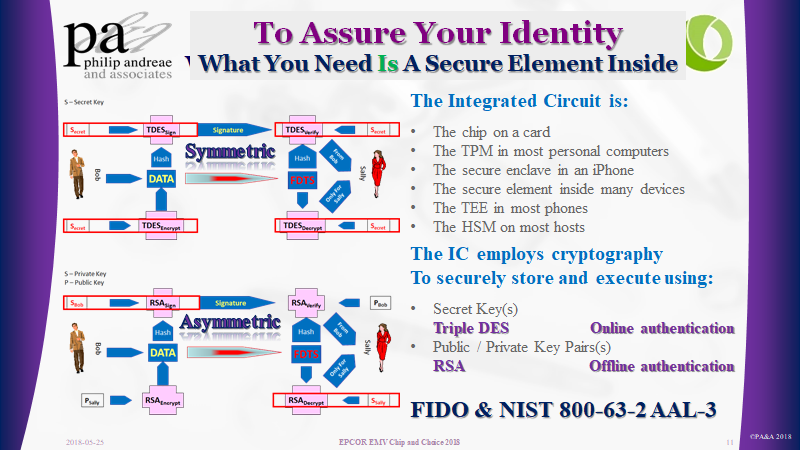
Today the Debit card could easily be enabled as a secure means of digital identification, with the Financial Institution being the trusted party. Simply knowing the public key of the international or domestic debit card payment scheme allows the party reading the card will know the person was issued this card by that financial institution.

While we in financial services focused on our requirements, the telecom industry was working on the SIM & GSM specifications under ETSI leadership. They created another form of Secure Digital Identity. They focused on securing the identity of the communications channel and were less worried about making sure the right consumer was present, although there is the ability to allow the user to lock the SIM and now even the mobile phone.

2013 I had the opportunity to join the FIDO Board. Within that body, the objective was to separate the concept of identity from the act of authentication. It works from the premise that as digital relationships expanded, the use of passwords and PINs are becomes an issue. The FIDO Alliance also recognized that the only way to secure our digital world, like we secured payments and mobile communications was with the introduction of multi-factor authentication rooted in the belief that the first factor had to be “what You Have” a secure element / enclave, TEE, TPM … capable of generating and or storing secret (symmetric) and private (Asymmetric) keys unique to the object and more importantly unique to the relationship.

Clearly identity and authentication are essential to secure relationships. And, in a digital world, communication is the mechanism that connects people and things together.

Helping consumers manage their relationships assuring privacy is an interesting angle. If I am understanding your platform, at least at the level of the subscription for telecommunications services this you are helping to manage.

Anyway. Back to the pitch. I would like to see about scheduling another conversation and figure out if there is anything I can do to earn an income and create revenue for you.

Digital Identity


Question for all those who advocate migration from card to electronic

We all are aware and many of us dream of a time when all of our physical identity artifacts are digital. We dream of consolidating these credentials in our electronic wallet, otherwise known as our mobile phone.

Today while visiting an outpatient imaging center, I was asked for my driver’s license. She would only accept the physical document, I offered to send an image by email. Her goal to scan my identity document into the electronic patient file she was creating. The idea of an image of the driver’s license in an email, well.

Sure the system could easily be changed to record digital credentials delivered by NFC or BLE. The first question, given the expensive medical system we have here in America; at whose cost?

Time could not be argued as a saving, she would only have saved a second or three of time to pass the card back to me.

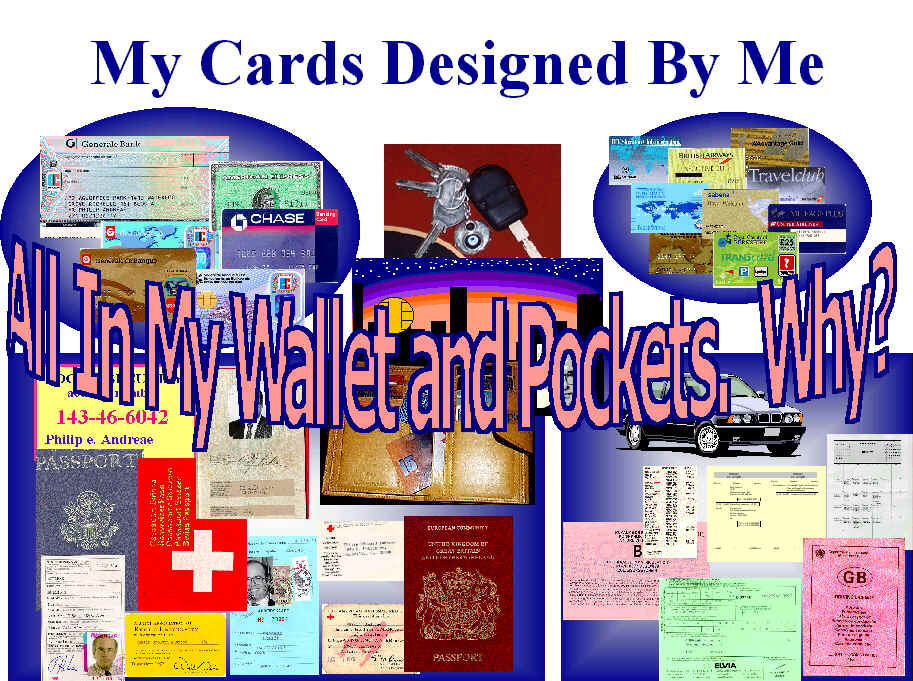
People discuss contactless cards and contrast them to the convenience of a Mobile Wallet. What we often forget is the reality. As long as we need to carry other physical identity artifacts, the convergence of our leather wallet into our electronic device is not happening.

In my humble opinion, it is an all or nothing situation. Yes, I will add digital credentials into the mobile wallet. But, unfortunately, the leather wallet is still part of my attire.

Better still, it does not need to be recharged. My leather wallet still works after the phone’s battery has died.

Digital Identity

Words to ponder as we think about the best way to secure our digital persona.

Identifier – A text string we use to uniquely identify ourselves to a relying party, person, government, employer, club or entity we wish to have or need to maintain a relationship with.  This group of entities hereafter will referred to as a replying party. 

Identity – We each are unique and have attributes 

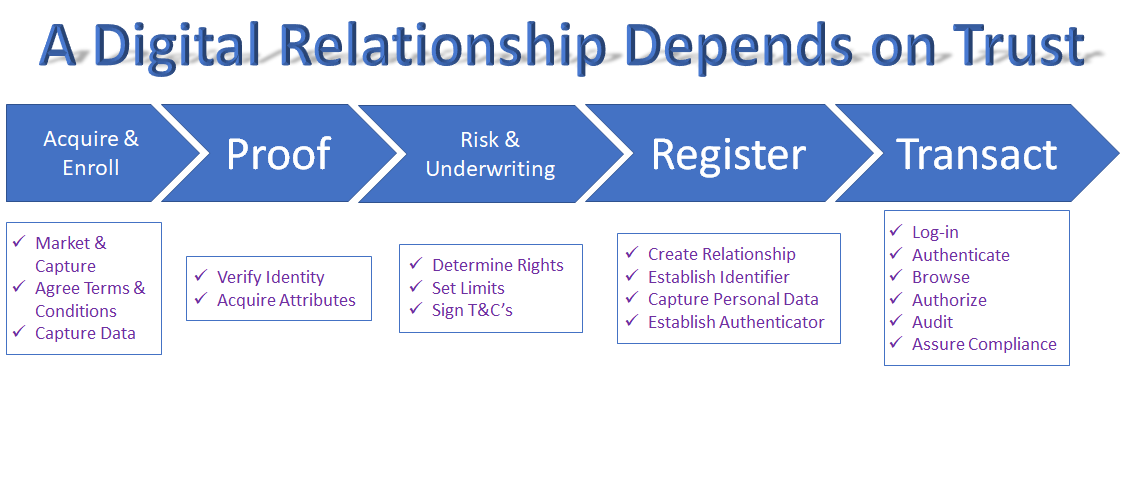
Verification – A process the entity we seek to establish a relationship with uses to determine the truth of the attributes we share. One could argue this is or should be a mutual process.  Many call this identity verification or identity proofing.

Registration – When we take these three words identifier, verification and identification and think about the first time we present ourselves to a relying party in the global digital environment. We typically present ourselves through a user interface to the entity we are interested in establishing a relationship with.  We register and the relying party creates a record of our existence.  They seek to recognize and record our identity.

This process typically requires us to invent or the relying party to present us with a unique identifier and agree to identify ourselves with this unique string, often called a user name, email address, bank account number, social security number, employee id, passport number, drivers license number or payment (card) account number ‘PAN’.  The ultimate goal of registration is for the relying party tonassure themselves we are unique and that the attributes we share are linked to our person. They verify our identity.

Today the challenge is to find an efficient, convenient and none intrusive method of Verification.

Authentication – We exist, we can be recognized and are able to present oneself over and over again to the relying party, using our identifier.  The challenge is how do we prove or assure our identity to the relying party each time. We need to authenticate ourselves.

Identification – Many confuse the dialogue above with this word.  The difference is how we present ourselves or better said how the relying party expects us to present ourselves.

With the wide use of biometrics and  many of the identifier we spoke of earlier, our identifier many not simply be some random string.  A biometric is personal and linked to our body or actions.  This biometric can be converted into an identifier and therefore once accepted as genuine and integrates the act of authentication into recognition of our identity.

Certain identifiers create a level of assurance, because the relying party trusts the attributes it asserts based on who issued that identifier.  They are willing to trust in our identity and associated attributes because of the verification done by the isuing party.  It a passport, an employee id, bank card or a drivers license.  The instrument has characteristic, privileges and attributes linked to the issuing party, not simply attributes associated with the individual.

As we move from a physical world to a digital world.  As people seek to use our identity to present themselves as someone they are not.  As we seek to separate the various relationships we establish.    Requires that we find ways of assuring our privacy while securing our relationships.  All this demands we find more secure methods of authentication that are convenient. 

Money 2020 – 2017 – Las Vegas – Wednesday Digital Identity and Payments

With David Birch We asked the Question.  Identity – Authentication – Identification – Authorization and ultimately verification, where are we.

Simple.  We have the technology.  We have the standards and more are coming.  Authenticate, is done, use FIDO.

Identification with Biometrics is illuminatingly possible.  Even the one I know how to spoof, Voice, with other factors layered in, does the job very well.

The challenge is Privacy and Confidentiality must be inherent while regulatory practices must be incorporated.


Citizen Bill of Cyber Bill of Rights

Created in December of 2011 as I reflected on the emergence of the Cyber Risk

My identity is mine electronic or otherwise

I will be prudent in its use

I understand if I enter into an agreement that you can prove it was me
Then I am responsible

I will carry with me an object that can be kept safe from intrusion and can easily be remotely destroyed

You, those entities human and other that I enter into a relationship with
Can offer me anything I am willing to opt-in to

Using a defined set of cryptographic relationships
I agree that a digital contract can be signed and agreed and has the full force of the law behind it

You will recognize that I am your human equal and will,
Save for acts of God and Nature,

Endeavor to provide quality and service


In the News as the Vice President of Oberthur Technologies

Oberthur Technology seeks to educate and support the migration to EMV


An Interview with George Peabody of Glenbrook


From a merchant perspective Oberthur offers thoughts for consideration


Healthcare is in need of secure authentication an Interview with Karen Webster


An Article published by Pymnts.com as we consider the last days before the migration


Digital Identity is what we require to secure our world an interview with Karen Webster


W3C and the WebCrypto Working group considering payments and Same Origin Policy


Why EMV and Why Now with Pymtns.com


A Founders of EMV’s view of the US migration to EMV


Understanding EMV in Our Digital Future an interview with Karen Webster


Counting Down to the migration to EMV


The ABCs of EMV


An interview with the Atlanta Constitution