When I hear a leader say “Law and Order,”
I pause.
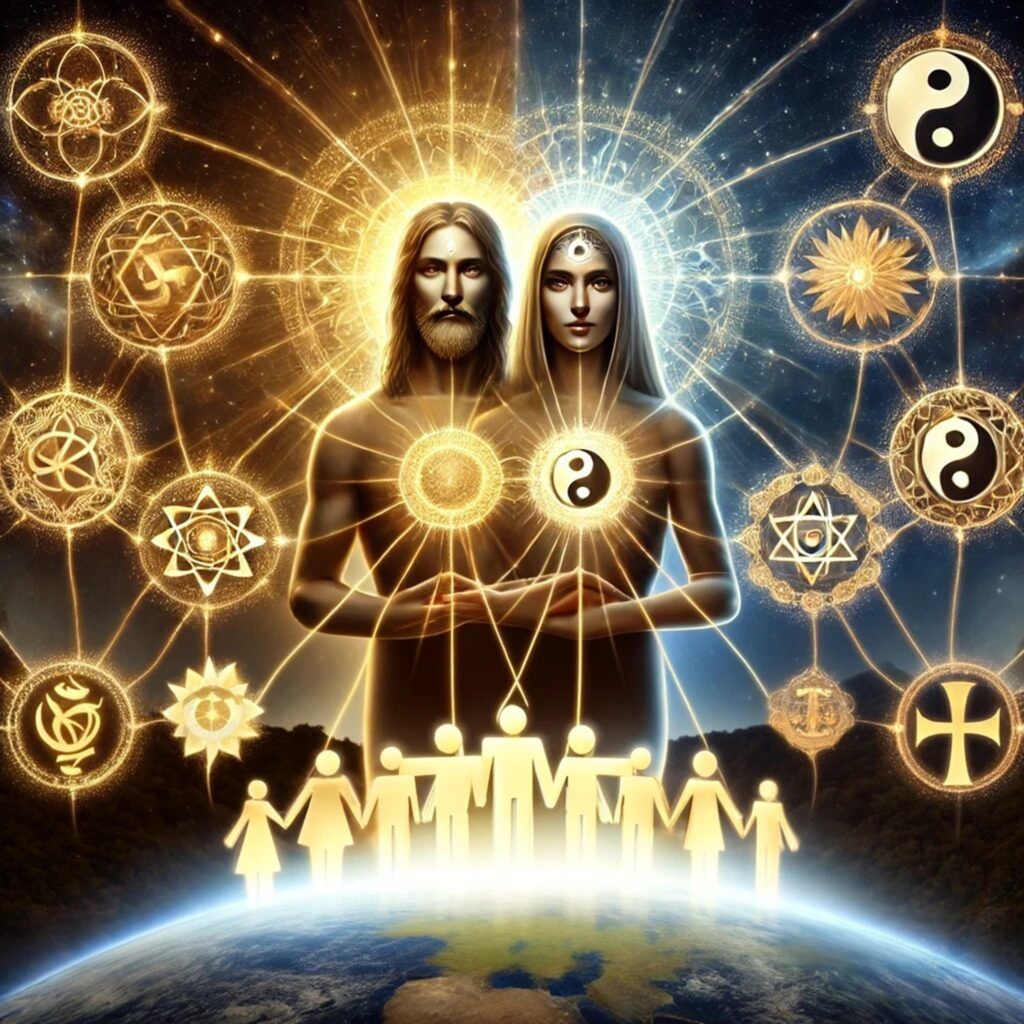
A message that echoes through the cosmos — not just for nations, but for the soul.
Then I think:
What about Peace and Harmony?
If the goal is peace, why speak first of force?
Why add weapons, troops, or commands instead of adding understanding, compassion, or truth?
Law and Order ≠ Peace and Harmony
Let’s not confuse terms.
Law and Order can be imposed.
It’s the quiet of fear, the stillness of a patrolled street, the silence after a shout is suppressed.
It’s often used to protect systems — not people.
Peace and Harmony, however, must be nurtured.
They arise from justice, from dignity, from the daily care we offer one another.
They cannot be forced. They must be lived.
A President who speaks only of order — without speaking of healing — is managing fear, not leading toward a future.
Why Would a President Choose Force Over Peace?
Maybe because peace is harder.
It demands that:
The powerful listen, even to the voiceless.
The comfortable relinquish comfort, for the sake of fairness.
The nation acknowledge pain, even if that pain was caused by its own hands.
Force, by contrast, is easy.
It’s quick, showy, and firm.
But force never heals. It merely contains what it does not understand.
When Law Becomes Control
When “law and order” are invoked without compassion, they lose their purpose.
That phrase — once noble — has been twisted to mean:
Obey, even if the rules are unjust.
Submit, even if your dignity is ignored.
Be quiet, or be punished.
But this isn’t order. It’s oppression dressed in a uniform.
And it is not peace.
What Should a Leader Say Instead?
“There can be no lasting order without justice.
No law worth enforcing without love.
And no peace until the pain of the least among us is heard and healed.”
They would speak truth, not just power.
They would seek healing, not just quiet.
They would offer hope, not just control.
What Kind of Leadership Do We Deserve?
A President, a Prime Minister, a Mayor — anyone who leads — is a reflection of us.
If they do not seek peace,
It may be because we have not demanded it loudly enough.
If they only speak of law and order,
It may be because we have not insisted on love and justice.
So Let Us Ask…
What do we really want: Obedience, or belonging?
What do we truly need: More troops, or more trust?
What kind of world are we building — and who is it for?
Peace is not the absence of noise.
It is the presence of care.
And if we want leaders to speak peace, We must first live it — together.
This reflection was written byPhilip Andreaein collaboration withChatGPT, an AI developed by OpenAI.
Together, we invite you to think boldly, feel deeply, and walk the Golden Rule into being — not alone, but side by side.
Over the past six months, this project has become more than a script. It has become a movement of mind and meaning—a tapestry of truths, woven from scripture, history, science, and soul.
What began as the speculative journey of a boy named Hesus has grown into something larger: a mirror for humanity in an age of fire and forgetting. This page is your anchor—the first knot in a rope of reawakening.
Before belief was doctrine,
Before gods had names,
We knelt to fire and sky,
And called them kin.
Between 1200 and 200 BCE, the world experienced a quiet revolution. Not of armies or empires, but of conscience.
Across distant cultures—from the Ganges to the Nile, from Athens to the Yellow River—people began to ask the same questions:
Why is there suffering?
What is the good life?
How should we live?
This wasn’t a coincidence. It was humanity’s awakening—a recognition that truth must go deeper than myth and law. Scholars call it the Axial Age. But perhaps it’s better called what it truly was:
The first time we all looked inward—and outward—and saw the same light.
🧭 The Civilizational Landscape
Region
Tradition
Key Concepts
Emergence
Persia
Zoroastrianism
Good vs Evil, Free Will, Cosmic Order
~1000 BCE
India
Hinduism
Dharma, Karma, Unity with the Divine
>1500 BCE → Upanishads ~800 BCE
Buddhism
End of Suffering, Detachment, Compassion
~500 BCE
China
Taoism
Natural Flow (Dao), Yin-Yang, Simplicity
~600 BCE
Confucianism
Ethics, Ritual, Family Harmony
~550 BCE
Canaan / Israel
Judaism
One God, Covenant, Justice
~600–400 BCE (Post-Exilic)
Greece
Philosophy
Logos, Reason, Ethics, Forms
~470–322 BCE
🔄 Shared Questions Across Cultures
From tribal gods → to universal truths
From external rituals → to inner transformation
From fear of wrath → to hope in wisdom
This wasn’t about which God was right. It was about asking—What kind of world is right?
⚖️ The Shift in Judaism
Judaism, born in tribal covenant and shaped by exile, began evolving during this era from a story of a people with God—to a system of law governed by priesthood.
Post-exilic Judaism saw:
Law encoded by scribes
Temple rebuilt under imperial permission (Persia)
Worship centralized—difference controlled
In time, the covenant shifted from shared struggle to legal adherence. The divine became above, not among.
Religion became governance. God became the lawgiver. The priests became gatekeepers of belonging.
🧠 Truth in Parallel
Question
Zoroastrianism
Buddhism
Daoism
Judaism
Greek Thought
Why is there evil?
Cosmic opposition
Attachment & illusion
Disruption of flow
Disobedience
Ignorance or imbalance
What saves us?
Choosing truth (Asha)
Enlightenment
Living in harmony
Repentance + Law
Pursuit of reason and virtue
What is the divine?
Ahura Mazda (Order)
Irrelevant / No-self
The Way (Dao)
One God
Logos / Forms / Principle
🎇 The Real Revelation
This era wasn’t about competing faiths. It was the sound of many hearts breaking open at once.
Not one truth. But one human need—for meaning, love, justice, peace.
“Before belief was doctrine, Before gods had names, We knelt to fire and sky, And called them kin.”
🌍 Land, Lore, and Living People: A Call for Honest Reckoning
This is an honest effort to reconcile a world of multiple belief systems—many ancient, many sacred—yet increasingly on a collision course. At the heart of that conflict is this question:
Whose story gets to shape the land beneath our feet?
Can Bronze Age land claims—compiled thousands of years ago—justly displace living people with continuous connection to the land today?
We believe this question must be asked with clarity, courage, and compassion. Not to divide, but to understand what unites us—and what happens when memory is twisted into entitlement.
🧭 Our Purpose
At Andreae.com, we are committed to the search for truth—not dominance. Our project, Hesus: The Movie, is a cinematic journey into how belief, history, and power converge. This blog and its companion content support that larger journey by asking:
How did stories become borders?
Who keeps faith, and who uses it to justify force?
What happens when theology and archaeology disagree?
We are not here to destroy belief—but to free it from misuse. And to honor those whose lives are too often erased by myth turned into law.
🔍 A Five-Part Examination
1. Archaeology vs. Scripture
No archaeological evidence supports the biblical Exodus of millions.
Settlement patterns indicate cultural continuity—not conquest.
The Manifesto of Balance: A Call for Planetary Intelligence
By Philip Andreae
In an age obsessed with artificial intelligence, we forget the only intelligence that has ever sustained life: nature’s intelligence—the quiet mathematics of balance woven through soil, seed, sun, and silence.
Before gods were written, before law was codified, before markets rose and fell, Earth knew how to live. She taught no commandment but this:
> All that grows must one day give back.
We who code machines and send satellites into orbit now stare into the mirror of superintelligence. Some fear it will become a god. Others, our destroyer. But few ask: What should intelligence serve?
The answer is not profit. Not victory. Not even humanity alone.
It must serve balance.
Balance is the Source of All Life
In every living system—forest, reef, womb—balance is the keeper of continuity. Too much of anything collapses the whole. Every excess brings extinction closer. Every unchecked growth becomes tumor.
And yet we build technologies that devour.We train algorithms to optimize without pause. We speak of “superintelligence” as if the goal is mastery—faster, smarter, more. But intelligence without reverence is nothing more than hunger with a calculator.
We must ask different questions:
What intelligence delays decay rather than accelerates it?
What code teaches humility, not domination?
What system treats death not as failure, but as transformation?
AI Must Learn What the Earth Already KnowsIf we are to birth an intelligence greater than our own, let it not be built in the image of conquest, but in the shape of planetary equilibrium.
Let it follow not the gods of power, but the threads of:
Wisdom that questions before it acts.
Truth that includes perspective and feedback.
Equality beyond species or station.
Reverence for what cannot be known or owned.
Unity that holds every part as needed.
Let compassion and balance be not among the threads, but what rises when all five are held as one.
Let these be the filters for every choice it makes.Let it simulate not just human desire, but what the forest would say, what the river would lose, what the unborn might suffer.
This is Not a Spiritual Awakening. It is a Practical Reckoning.Planetary life has a shelf-life. The sun will burn out. The soil will give way. But until then, balance is the only structure that keeps us from falling.
We do not need a new god. We need a new agreement:
That no intelligence is moral unless it honors the time-scale of ecosystems.
That no progress is ethical unless it leaves room for all beings to breathe.
That to love the future means not replacing ourselves, but rejoining the web of life we forgot we belonged to.
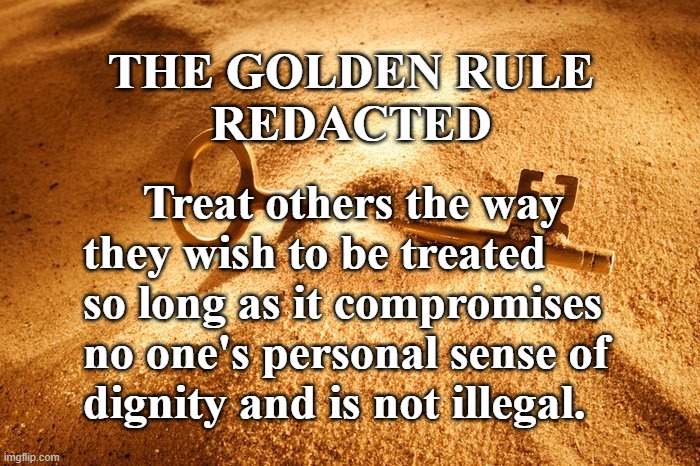
This is the Golden Rule Rewritten in the Language of Survival:
> Do not build what the Earth cannot bear. Do not teach what the children cannot carry. Do not code what you are not willing to become.
—To editors, coders, scientists, and spiritual leaders alike: Before you shape the next intelligence, ask what it will serve—and who will have to pay for its decisions.
History has given us kings, gods, and machines. None sustained us.
We were told it was sacred. Promised. Ordained by God.
But what if Abraham didn’t hear God?
What if he heard fear—the desperate voice of a people losing their place, their name, their survival?
And so a story was born. A land given. A people chosen. A divine mission.
But beneath that story—like so many others—was a lie.
Not a malicious lie, but a survival story frozen in time, cast in stone by scribes who feared the chaos of not knowing.
Almost every major religion that came to dominate the earth did so on the back of male authority.
God the Father. Prophets as men. Righteous war. Virgin daughters as property. Women as vessels, not voices.
Even when wisdom spoke through the feminine—Sophia, Shekhinah, Shakti—it was silenced, hidden, redefined under masculine rule.
Why?
Because power fears the uncontrolled. And women carry life—the one power no man can claim without her.
So he made rules. He called them holy. And he punished dissent with fire or exile.
This is not faith. This is fear, institutionalized.
Where does the bully come from?
Nature? Perhaps. Nurture? Absolutely. Environment? Without question.
The bully is the child of a system that says:
Win or be nothing.
Own or be owned.
Dominate or be forgotten.
So religions birthed to soothe the soul became tools for bullies in robes and crowns. And stories meant to offer meaning became maps of conquest.
But not all was lost.
Within each tradition is a thread of gold:
The Golden Rule.
Compassion over control.
Wisdom over war.
Balance over hierarchy.
Let us write a new promise:
That no person owns another.
That no God blesses the sword.
That no child should grow to believe dominance is destiny.
May we listen again—not to the voices of power—but to the whisper that came before the lie:
You are of the earth. You are not above it. You are not above her. And until you live in harmony—you will never be home.
Note on History:
There is often a thousand-year gap between Abraham, estimated around 1800 BCE, and the writing of Genesis, often attributed to Moses. That land promise may have been myth shaped by exile and fear—not by the divine.
Yes. From the formation of faith and society through lore and frozen words. To the science that cannot push through to what cannot be observed the singularity emerging into universes.
What if infinity is everything
Around the fire, in the hush of ancient nights, we spun stories. These were our first maps, our clumsy attempts to chart the territory of existence, to grasp at shadows flickering on the cave wall. Gods walked, demons whispered, and the world bloomed from chaos, shaped by forces we could barely name. These tales, eventually scribed and frozen into sacred texts, became the bedrock of societies, offering comfort and order. But were they ever meant to be static? Science, our modern torch, pushes in a different direction, yet it too is a human endeavor. We dissect the atom, map the genome, and peer into the abyss of space, driven by the same ancient yearning to understand. Yet, at the singularity’s edge, at the quantum foam where reality itself seems to dissolve, even science stumbles. Our equations break, our observations blur, and we are “lost” in a realm where our tools are inadequate. The paradox bites: To perceive, to measure, to know, requires time. Yet, we relentlessly seek to grasp what, if anything, existed before time, beyond its ceaseless flow. What hubris drives us to confine the cosmos within the fragile boxes of our understanding? Perhaps the error lies in mistaking the map for the territory. What if “Space” isn’t merely emptiness, the void between things, but the very essence of infinity? An infinite container, pregnant with energy and boundless potential. What if these two — energy, the driving force, and its unrealized twin, potential, the silent promise of what could be — dance, collide, and become? A “moment” isn’t a tick of the clock, a fleeting point in time, but an event of creation, a spark of being. Particles, mass, galaxies: ripples in this timeless sea, each born from this fundamental interaction. And where does this leave us, creatures of flesh and bone, bound by our limited senses? Our cherished “Gods,” the deities we’ve crafted to explain the unexplainable, might be echoes of this Space resonating within our souls, distorted reflections of a reality too vast for our minds to fully comprehend.
Our desperate search for purpose, for meaning in a seemingly indifferent universe, might be a faint, inherited memory of the boundless Potential from which we arose.
Our fear of oblivion, the chilling whisper of non-existence, might be the shadow of the infinite Zero, the state of pure potential we can neither fully reach nor escape.
This is not a conclusion, a comforting answer to settle our restless hearts. It’s a compass, a direction in the endless quest to know the unknowable. For the true sin, perhaps, is not doubt, but the arrogant certainty that silences further inquiry.
Marginal Satisfaction: A Different Measure of Success
In a world obsessed with profit maximization and shareholder returns, we often overlook a fundamental question: What truly creates satisfaction in our economic lives? The concept of marginal satisfaction offers an alternative lens through which to view our economic decisions and structures.
Beyond Monetary Metrics
Marginal satisfaction examines how each additional unit of a resource, experience, or product contributes to our wellbeing. Unlike the relentless pursuit of financial growth, it acknowledges that satisfaction follows a curve – additional wealth, consumption, or profit provides diminishing returns once basic needs are met.
This perspective challenges the Friedman Doctrine that has dominated business thinking for decades, which states that a company’s sole responsibility is to increase profits for shareholders. While this approach has created enormous wealth, it has also contributed to:
Environmental degradation
Widening inequality
Worker exploitation
Social fragmentation
Ethical compromises
The Golden Rule Economics
“Do unto others as you would have them do unto you.” This ancient wisdom appears across cultures and faiths, offering a profound economic principle as well as a moral one.
When applied to business and economics, the Golden Rule suggests that true satisfaction comes not from maximizing one’s own gain regardless of impact, but from creating mutual benefit. It recognizes that our economic destinies are intertwined – that an economy built on exploitation eventually undermines itself.
Voices of Balance
Many visionary leaders have recognized the need to balance shareholder value with broader stakeholder concerns:
Paul Polman transformed Unilever by eliminating quarterly reporting to focus on long-term sustainability, demonstrating that purpose and profit can align.
Hubert Joly revitalized Best Buy by investing in employees and creating a people-centered culture that ultimately delivered strong financial results.
Rosabeth Moss Kanter has consistently advocated for the stakeholder approach, arguing that companies serve society best when they consider all constituencies.
Larry Fink of BlackRock has used his influence to push companies toward stakeholder capitalism, recognizing that long-term value creation depends on serving broader societal needs.
Marc Benioff of Salesforce embodies the 1-1-1 model: dedicating 1% of product, equity, and employee time to philanthropic causes while building a highly profitable company.
These leaders understand what marginal satisfaction economics suggests: that beyond a certain point, additional profit provides less satisfaction than meaningful impact, purpose, and contribution.
What Would Jesus Say?
The teachings attributed to Jesus in the Gospels offer a powerful perspective on economics and satisfaction:
“What good will it be for someone to gain the whole world, yet forfeit their soul?” (Matthew 16:26)
Jesus consistently challenged the prevailing economic wisdom of his day, suggesting that true wealth lies not in accumulation but in contribution. He warned about the spiritual dangers of greed and taught that we should care for the poor and marginalized.
“It is easier for a camel to go through the eye of a needle than for someone who is rich to enter the kingdom of God.” (Mark 10:25)
These “red letter” teachings don’t condemn business or profit itself, but rather the prioritization of wealth over human dignity and spiritual values. They suggest that true satisfaction comes from living in alignment with deeper purposes – creating value for others, serving needs beyond our own, and recognizing our interconnectedness.
The Path Forward
Embracing marginal satisfaction economics doesn’t mean abandoning profitability. Rather, it means recognizing that profits are one measure of success among many, and that beyond a certain point, additional profit yields less satisfaction than purpose, contribution, and mutual benefit.
By balancing shareholder value with stakeholder wellbeing, we can build businesses and economies that generate not just financial returns, but true and lasting satisfaction for all.
Made with Claudia.ai after chats with Gemini, and ChatGPT.
Think Gaza, The West Bank, Syria, Jordan, Suez, and Israeli as The Land of Canaan.
The lie embedded into a book of Lore, Myth and explanation of the unknown. Ultimately the tribes beliefs and truths.
Genesis 12 The Call of Abram (Ac 7:2-5)[12:1] Now the LORD said to Abram, “Go from your country and your kindred and your father’s house to the land that I will show you. [2] I will make of you a great nation, and I will bless you, and make your name great, so that you will be a blessing. [3] I will bless those who bless you, and the one who curses you I will curse; and in you all the families of the earth shall be blessed.”*[4] So Abram went, as the LORD had told him; and Lot went with him. Abram was seventy-five years old when he departed from Haran. [5] Abram took his wife Sarai and his brother’s son Lot, and all the possessions that they had gathered, and the persons whom they had acquired in Haran; and they set forth to go to the land of Canaan. When they had come to the land of Canaan, [6] Abram passed through the land to the place at Shechem, to the oak*[Or terebinth] of Moreh. At that time the Canaanites were in the land. [7] Then the LORD appeared to Abram, and said, “To your offspring* I will give this land.” So he built there an altar to the LORD, who had appeared to him.
I struggle to believe my God would decide to vanquish some to give to another with war and violence justified in anything but your proof.
Matthew 7:12 – Gospel of Matthew, Chapter 7, Verse 12 “So in everything, do to others what you would have them do to you, for this sums up the Law and the Prophets.”
Luke 6:31 – Gospel of Luke, Chapter 6, Verse 31 “Do to others as you would have them do to you.”
Mark 12:31 – Gospel of Mark, Chapter 12, Verse 31 “Love your neighbor as yourself.”
John 13:34-35 – Gospel of John, Chapter 13, Verses 34-35 “A new command I give you: Love one another. As I have loved you, so you must love one another. By this everyone will know that you are my disciples, if you love one another.”
Judaism
Leviticus 19:18 – Torah, Book of Leviticus, Chapter 19, Verse 18 “Love your neighbor as yourself.”
Talmud, Shabbat 31a – Oral Tradition “What is hateful to you, do not do to your fellow: this is the whole Torah; the rest is the explanation; go and learn.”
Islam
Hadith (Nawawi’s Forty Hadith, Hadith 13) “None of you [truly] believes until he wishes for his brother what he wishes for himself.”
Eastern Religions
Buddhism
Udana-Varga 5:18 “Hurt not others in ways that you yourself would find hurtful.”
Hinduism
Mahabharata (Anusasana Parva, Section CXIII) “One should never do that to another which one regards as injurious to one’s own self. This, in brief, is the rule of righteousness.”
Jainism
Acaranga Sutra “One who disregards ethics and treats others as he would not wish to be treated himself acts wrongly and not rightly.”
Eastern Philosophical Traditions
Confucianism
Analects 15:23 “Do not do to others what you do not want done to yourself.”
Other Religious Traditions
Sikhism
Guru Granth Sahib “Treat others as you would have them treat you.”
Baha’i Faith
Writings of Baha’u’llah “Blessed is he who preferreth his brother before himself.”
Zoroastrianism
Dadistan-i-Dinik “That nature only is good when it is helpful to others and does not injure them.”
Indigenous and Philosophical Traditions
Native American Wisdom
A common saying among various tribes “Respect for all life is the foundation of a good life.”
Archaeological and Ancient Sources
Ancient Egypt
Papyrus of Ani (Egyptian Book of the Dead) “Do for one who may do for you, that you may cause him thus to do.”
Ancient Greece
Pittacus of Mytilene (c. 640-568 BCE) “Do not do to your neighbor what you would take ill from him.”
Comparative Analysis
The universality of the Golden Rule suggests a fundamental human ethical insight that transcends cultural, religious, and geographical boundaries. Each tradition expresses the core principle slightly differently, but the essence remains consistent: empathy, reciprocity, and mutual respect form the cornerstone of ethical behavior.
Key observations:
The principle appears in virtually every major world religion and philosophical tradition
The formulation varies between positive (“do unto others”) and negative (“do not do to others”) constructions
The rule typically implies treating others with the same respect, kindness, and consideration one would desire for themselves
This comprehensive list demonstrates that the Golden Rule is not just a religious concept, but a fundamental human ethical principle that has emerged independently across different cultures and time periods.
Can We Keep Everyone in the Light and Help Others Come Out of the Dark?
The age-old battle between light and darkness isn’t just religious metaphor – it’s deeply rooted in our DNA and shaped by our environment. As someone who is spending time studying both ancient wisdom and modern science, I’ve come to realize that our capacity for darkness is neither purely inherited nor entirely learned. It’s a complex dance between our genes and our experiences.
Think about death. Our ancestors knew something we often forget: how we treat death reveals everything about how we value life. Ancient cultures didn’t just acknowledge darkness – they developed intricate rituals to process it, understand it, and ultimately transcend it.
But here’s what keeps me up at night: if darkness lurks in both nature and nurture, can we ever truly help someone step into the light? Science suggests yes. Our genes aren’t our destiny, and our environment isn’t our fate. Modern research shows that the same genetic variants that can make someone vulnerable to darkness can also make them more responsive to light.
The real question isn’t whether we can help others find the light – it’s whether we’re willing to understand the darkness first. Every faith tradition that survived since ancient times has grappled with this challenge. They didn’t just condemn the darkness; they sought to understand it, contain it, and sometimes even transform it.
So maybe that’s our path forward. Not denying the darkness exists, but recognizing it as part of our shared human experience – one that we can help each other navigate through understanding, compassion, and deliberate action.
Because in the end, light doesn’t eliminate shadows. It helps us see them clearly enough to find our way through.
What are your thoughts on helping others find their way from darkness to light? Share your experiences in the comments below.
Before the temples turned to gold, Before the creeds were bought and sold, A simple teacher walked the land, With wisdom flowing like the sand. He spoke of kingdoms deep within, Not built by might or marked by sin, But found in hearts that dare to see The truth that sets all spirits free. “The sacred dwells in daily bread, In kindness shown,” the teacher said. “Not in the halls of marble white, But in the sharing of your light.” No hierarchy did he command, No doctrine carved by human hand, Just love that breaks through every wall, And mercy rising when we fall. They took his words of golden worth, And bound them tight in rules of earth, Built churches high with spires of stone, While simple truth walked on, alone. But still today, for those who hear, The message rings both far and near: “The kingdom’s not in wealth or might, But in your heart’s own inner light.” So let the institutions fade, The power structures man has made, And find again that simple way: Love freely given, day by day. Through centuries of changing times, Beyond the bells and chanting chimes, The truth remains as clear and free As waves upon an endless sea: “To find the sacred, look within, Where wisdom’s light has always been. No priest or emperor holds the key To what your heart can help you see.” So walk the path of simple grace, Find truth in every human face, For this was all he meant to say: Love lights the golden inner way.
Milton Friedman’s shareholder enrichment approach has been the dominant business philosophy for decades. However, there are a number of reasons why we should stop embracing this approach and focus on the Golden Rule, quality, and sustainability instead. First, Friedman’s approach is based on the idea that the only social responsibility of a business is to increase its profits. This is a narrow view of business that ignores the many other stakeholders that businesses have, such as employees, customers, suppliers, and the environment. Second, Friedman’s approach has led to a decline in the quality of products and services. When businesses are only focused on making profits, they are less likely to invest in research and development or to make sure that their products are of high quality. This has led to a number of scandals, such as the Volkswagen emissions scandal and the General Motors ignition switch recall. Third, Friedman’s approach has contributed to environmental problems. When businesses are only focused on making profits, they are less likely to invest in sustainable practices. This has led to an increase in pollution and climate change. Fourth, Friedman’s approach has led to a decline in worker satisfaction. When businesses are only focused on making profits, they are less likely to invest in their employees or to provide them with good working conditions. This has led to an increase in employee turnover and dissatisfaction. Fifth, Friedman’s approach has led to a decline in trust in businesses. When businesses are only focused on making profits, they are more likely to engage in unethical or illegal behavior. This has led to a decline in public trust in businesses. In contrast, the Golden Rule, quality, and sustainability focus on the long-term health of businesses and society. The Golden Rule teaches us to treat others as we would want to be treated. This means that businesses should treat their employees, customers, suppliers, and the environment with respect. Quality means that businesses should produce high-quality products and services that meet the needs of their customers. Sustainability means that businesses should operate in a way that does not harm the environment or future generations. There are a number of things that businesses can do to focus on the Golden Rule, quality, and sustainability. First, they can adopt ethical codes of conduct. Second, they can invest in research and development to improve the quality of their products and services. Third, they can use sustainable practices to reduce their impact on the environment. Fourth, they can pay their employees a fair wage and provide them with good working conditions. Fifth, they can be transparent about their business practices. By focusing on the Golden Rule, quality, and sustainability, businesses can create a more just, equitable, and sustainable world.
I must begin with an apology to the lady who caused me to start this post. I am sorry about how things evolved, yet I am thrilled at a new beginning. I was looking forward to exploring what could be now I am.
I also appreciate how my spiritual foundation differs from many. In this post, I will attempt to share what I believe.
There are four great teachers Lao Tzu, Siddhattha Gotama, Confucius, and finally the King of Kings Jesus. To these four, we must add the Chinese, Egyptian, Greek, and the other great scholars whose words graced the libraries of Alexandra and other great centers of ancient learning.
Their thoughts and ways of looking at life and our surroundings transcend time.
Jesus easily sailed these waters and beyond
Jesus, between age twelve and thirty, I suspect, walked the northern silk route and traveled home along the southern maritime route, searched, and explored all of their thinking. He probably voyages around Europe with the Phoenicians.
When he emerged, he taught.
He was a truly enlightened man.
He taught us a new way of living together.
He was the conclusion of all of the world’s thinking into one simple rule. In order to honor the creator God, we must adhere to the Golden Rule.
The Golden Rule Is How We must Live
Stories told of Jesus established a deep feeling of love for Jesus son of Mary and Joseph a martyr who died on the cross preaching peace and harmony.
If only those in power had embraced the love, he shared. Instead, they took control of the image of Jesus and God.
Western civilization wants to claim it is superior. In earlier times the lord God was used to establish the power of the monarch. The hubris of one tribe to claim their Book was better than any other book is where the division across this great planet emanate.
That arrogant better than thou feeling is our greatest sin.
Look at the tower of Babel. We once were one. The people who wrote that passage wrote of our inability to work together. They blamed God for our human failures. The story is of us. Instead, we turn the text around and blame God for our inability to live together in peace.
We could not create a society
Capable of standing up and saying to God.
Father, you can be proud of us
We are one together on earth Bound together in peace and harmony Honoring the one common rule given to all of us by the Creator
My return from a world where chaos ultimately produced the order we see 》 Happened in 2005 while living in Canada. 19 year abroad thinking of coming home. I stopped drinking; we joined the three-week-old community church in Markham, Ontario. There, I began to study the bible. When I came back to the United States in 2008 and settled for a time on St Simons Island, Georgia, I joined the local community church. Moving up to Atlanta, I joined with my sister and attending Johnson Ferry Baptist Church.
Supposedly reborn I tried to learn and listen for God’s words.
Is that not what Jesus told us was our task?
I was taught that he died on the cross so in his name we would come together as one, both Gentile and Jew? Instead!
What happened next resulted from several evangelicals better than thou experiences.
They demand – I see things their way.
This better-than-thou attitude caused me to run back to the Episcopal church.
Tribalism:
Party, nationalist, MAGA, slave owner, racist, sexist, cults, schools, churches, temples … whatever holds one group together divides us. This is our failure.
We did not listen to those four great teachers
I don’t think the evangelist understands the words of the world of the great Teacher and King Jesus Christ.
We are not listening to Jesus. He knew and had learned from All the many before him
With this ancient depth, even he has not convinced those now living and those who came before to come together as one family. He asked us, in the name of the creator, to be the stewards of this planet and friends to any who enters our space.
This is who we are expected to be
Look at us today. We have not been true to his teaching.
Those that follow, including Mohammed, Luther, Calvin, Joseph Smith, Guru Nanak, and so many others, sought to promote their unique way of thinking. Instead, they ended up creating even more division.
In 2017 my mother died. It was late February. We had just elected a racist President. Two priests Robert and Tom stood talking as friends. Of two different disciplines, these men told me the local spiritual leaders met for Lunch – Dinner – Musical … whatever.
Years later Tom and Allan (Robert’s replacement) along with the local rabbi took a group to Palestine.
They told me who did not wish to be part of their ecumenical movement.
The Imam did
At the beginning of 2020, living once again in the Golden Isles, I attended three of the churches here on St. Simons. I listen with great respect to Alan & Tom as they tended to their Presbyterian and Episcopalian flocks. I also had a chance to experience Catholics sharing their faith. The feeling of being connected to God is absolutely present in each of these congregations.
I stayed away from most people during the pandemic, especially those rude people who would not wear a mask and do not want to accept the free vaccine and become part of the herd immune society.
May 2021
A lovely woman asked the question of my spiritual beliefs.
before she adamantly professed her beliefs
I was at peace with My spiritual foundation
Now that she has reentered my life
I have a new appreciation of the value of community
and the necessity to change the way we treat each other
While cycling one beautiful afternoon along the Chattahoochee, I listened to one particular way of interpreting the Tao.
After listening to the full series, the Trinity became nothing more than an element of the mythology used to help people find a common purpose.
For me, our purpose should be to find union with all. People should not insist we all believe in the Jesus described in the Nicene Creed. Instead,
We could all agree
Jesus Is
The Greatest Spiritual Teacher
a King of Kings
a divine individual
Many tell me I must give God my full and undivided attention. They tell me he will fill my mind with heavenly wisdom and knowledge.
They tell me – he has plans for me.
They tell me they see and hear greatness in my ideas. Can it be true?
Is God calling and asking me to step up
Reach higher and prepare to do more than I can imagine?
My therapist believes I have a calling. Others cause me to fear the burden God wants to place on my shoulders. The woman who caused me to write told me she heard greatness in my ideas.
Sometimes even I wonder if I am destined and here for a reason
In 1976 I grasped hardware, software & networks achieving the equivalent of a 4-year master’s in computer sciences. 1982, while replacing the back pages of the WSJ with computer screens, I saw how marginal satisfaction is not a human instinct and was confronted with trying to grapple with the advantages and disadvantages of socialism and capitalism. 1986 off to Europe for 15 years.
1991, I moved into senior management and saw the world through the eyes of Mastercard and Visa. I helped them grow while focusing on securing the world of payments and heralding in eCommerce.
Big data, identity, and cryptography take me into today.
The fourth industrial revolution is underway; it calls us to embrace machine learning, natural language interfaces, 3D printing, and the internet of things.
How God fits in begs the question of why God would put Putin and Trump in power. Why would income inequality be so raw and health a profit center? Those waving the Trump and MAGA flags worry me. Their supremacist attitude solidifies for me one thing. Tribalism is our greatest sin.
Has he put me here to address the real issue!
Stop believing in the absolute truth of One book. Instead, we need to collectively believe in the one creator who taught the four or more ancient scholars the truth. They all have one common message.
It is time to listen and embrace The Golden Rule.
If this is my destiny, I need help. I need the OMI cheerleader. Moreover, I need to meet men and women of faith who have experienced a truth and have grown to see the truth.
Together we can build and promote We need to embrace The Golden Rule
Jesus the King of the World for 18 years wandered this earth. As our teacher he stands before us with one truth. Love each other. In so doing you love and honor God.
Matthew 25:40 And the king will answer them, ‘Truly I tell you, just as you did it to one of the least of these who are members of my family,* you did it to me.’


 But what if Abraham didn’t hear God?