What do the years before Jesus’s public ministry allow us to know—and what do we hope to understand? HESUS / ISSA is a historically disciplined work of fiction, not a claim to have recovered a missing biography. Before the journey begins, we invite the reader into the questions guiding it.
These questions began with one human life of reading, travel, belief, and doubt. Today we pursue them with AI research companions capable of opening paths across languages, archives, and scholarship that once demanded access to distant libraries. Greater reach is not greater certainty: every source must still be examined, and the final responsibility remains human.
A Dialogue Before the Road
Reader: Why tell the story of years that history scarcely records?
We: Because silence raises questions. We know the teachings attributed to Jesus have shaped countless lives. We want to explore how a child, a family, a community, and encounters with the wider human world might have shaped the man before public teaching began. That word might matters. We seek understanding, not a newly invented certainty.
Reader: Where does the record end and our imagination begin?
We: Luke tells of Jesus at twelve among teachers in the Temple and later says he was about thirty when his public ministry began. Those passages do not account for the intervening years. They do not prove that he traveled to India, studied in a monastery, or crossed the breadth of Asia. We must never use an absence of evidence as evidence for the journey we imagine.
Reader: Then why send Hesus and his companions beyond Galilee?
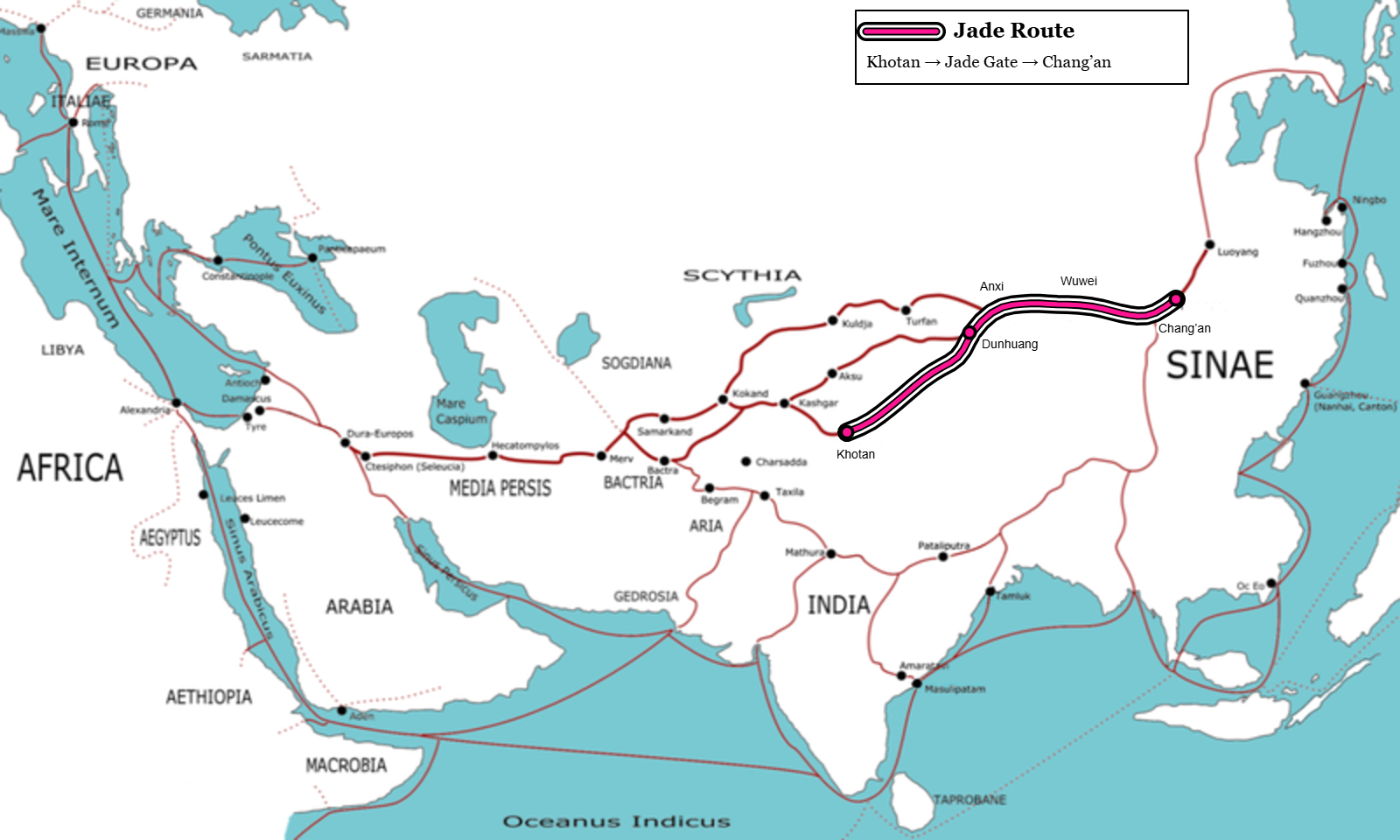
We: Because the ancient world was more connected than a modern map of separate civilizations suggests. Merchants, sailors, migrants, teachers, goods, stories and languages moved along overlapping networks. We can investigate which routes and encounters were possible in the period. But the existence of a trade route does not establish that Jesus used it. Our caravan is a dramatic reconstruction, subject to the test of what was real when.
Reader: Are we trying to show that Jesus borrowed his teaching from other faiths?
We: No. We begin by respecting the Jewish world in which Jesus lived. We then listen carefully to other voices—Brahmanic, Buddhist, Zoroastrian, Confucian, Daoist, and the many local traditions a traveler might encounter. We seek similarities without erasing differences. Shared moral insights are invitations to inquiry, not proof of a chain of influence.
Reader: What do we listen for?
We: Not only what a teacher says. We watch what happens at the market scale, at the family table, on the ship in a storm, beside the worker, before the ruler, and at the threshold where someone is denied a voice. Faith, economy, community, and governance belong to the same human history. Women and men, children and elders, insiders and strangers must all be visible in our accounting.
Reader: What question returns at every stop?
We: Why not? If we know that cruelty wounds, why do we excuse it when it serves us? If fairness matters, why do birth, wealth, office, gender, and force so often decide who is heard? When does leadership necessary for cooperation harden into hierarchy? And at what point does a community’s right to believe become a claimed right to impose its morality upon others?
Reader: Is the Golden Eye another creed?
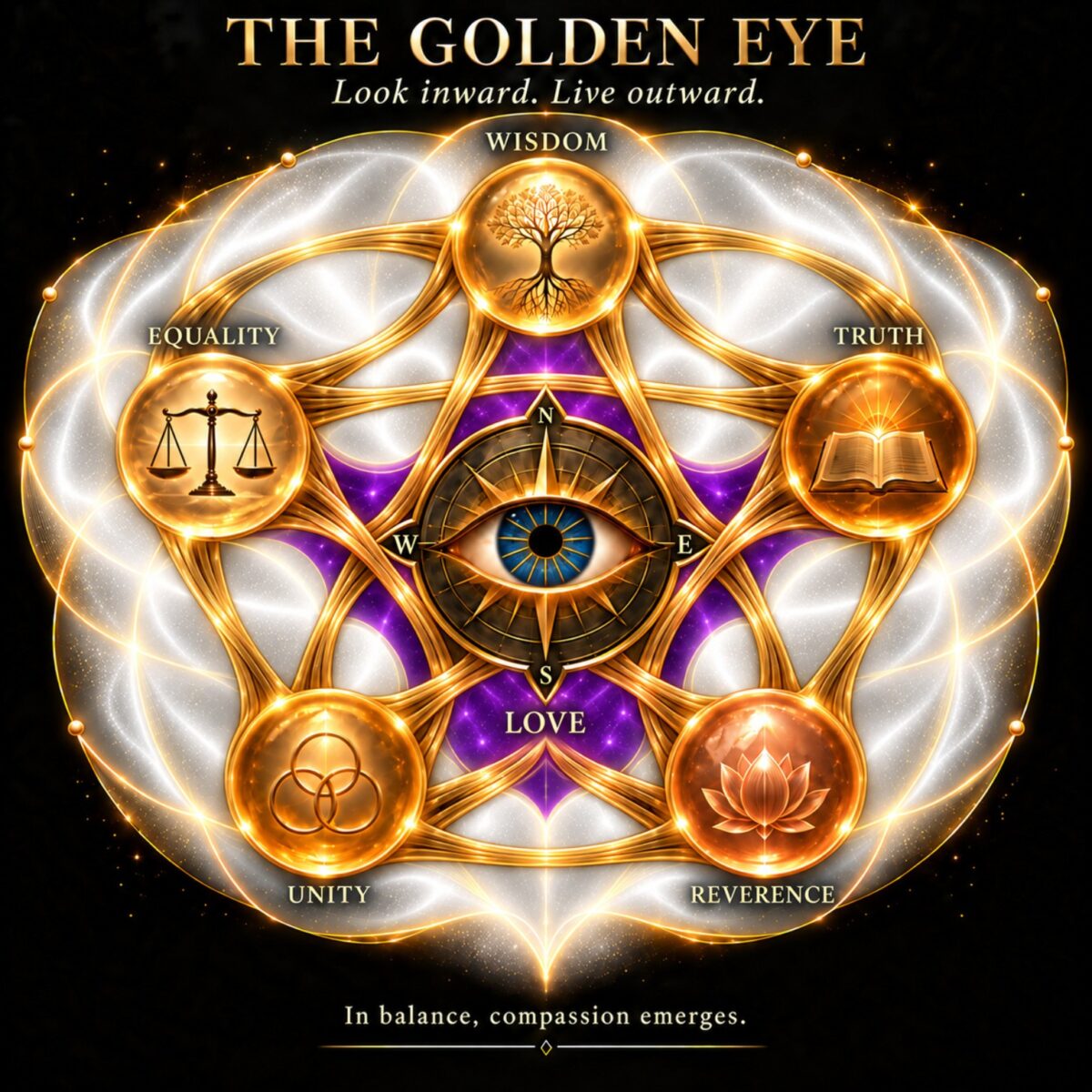
We: No. It is our way of exploring the capacity to look inward and outward, to observe both what we profess and what we practice. The Five Golden Threads—Wisdom, Truth, Reverence, Unity, and Equality—are an interpretive framework developed through this project, not a claim that Jesus historically named them. Love and Respect help bind them in practice; balance and compassion are what we hope can emerge. The Golden Eye, Soul, and Kingdom of God invite questions about inner life, not a declaration that one metaphysical interpretation has been proved.
Reader: And when a cherished story contradicts the evidence?
We: We change the story or identify it as fiction. We separate attested history, reasoned inference, and dramatic invention. A compelling scene earns no exemption. AI research companions help us discover sources, challenge assumptions, and expose bias, but their agreement is not evidence. Human judgment remains responsible for the work, and disagreement stays visible until resolved.
Reader: Do we intend to settle who Jesus was?
We: We cannot settle for every believer, skeptic, historian, or reader what belongs to faith and what belongs to history. We can refuse to disguise one as the other. We can respect what people believe, ask what the earliest record supports, and test our own conclusions by the same measure we apply to everyone else.
Reader: How does the journey end?
We: At the Jordan, at the threshold. Our story ends before the baptism and before the public ministry. We do not insert later theology into the earlier lives of our characters. What follows belongs to the history and faith traditions that readers already know—and to the questions each reader carries forward.
Reader: What, then, do we seek?
We: Not dominion over a conclusion. We seek the courage to look again: at what humanity already knew, at what we repeatedly failed to practice, and at the possibility that understanding one another need not require becoming the same. The road is imagined. The questions are ours.
Our historical discipline
Attested: A claim grounded in a surviving ancient source or material evidence, with its limitations stated. Inferred: A reconstruction consistent with the period but not directly documented for these individuals. Invented: A character, conversation, journey, or connection created for the drama. The series must let these categories remain distinct.
The first-century Periplus of the Erythraean Sea and archaeological work at Red Sea ports help establish the reality of Indian Ocean trading networks; neither proves a journey by Jesus. Luke’s Temple narrative supplies an ancient literary anchor, not an itinerary for the missing years.
Explore the project: Hesus — series home · Episode 1 — Whispers Before the Road · Twelve-episode treatment · AI research and authenticity method.
Historical context for further reading: Bradly S. Billings on Luke 2:41–52; The Archaeological Record of Indian Ocean Engagements in the Red Sea; Introduction to the Periplus of the Erythraean Sea.