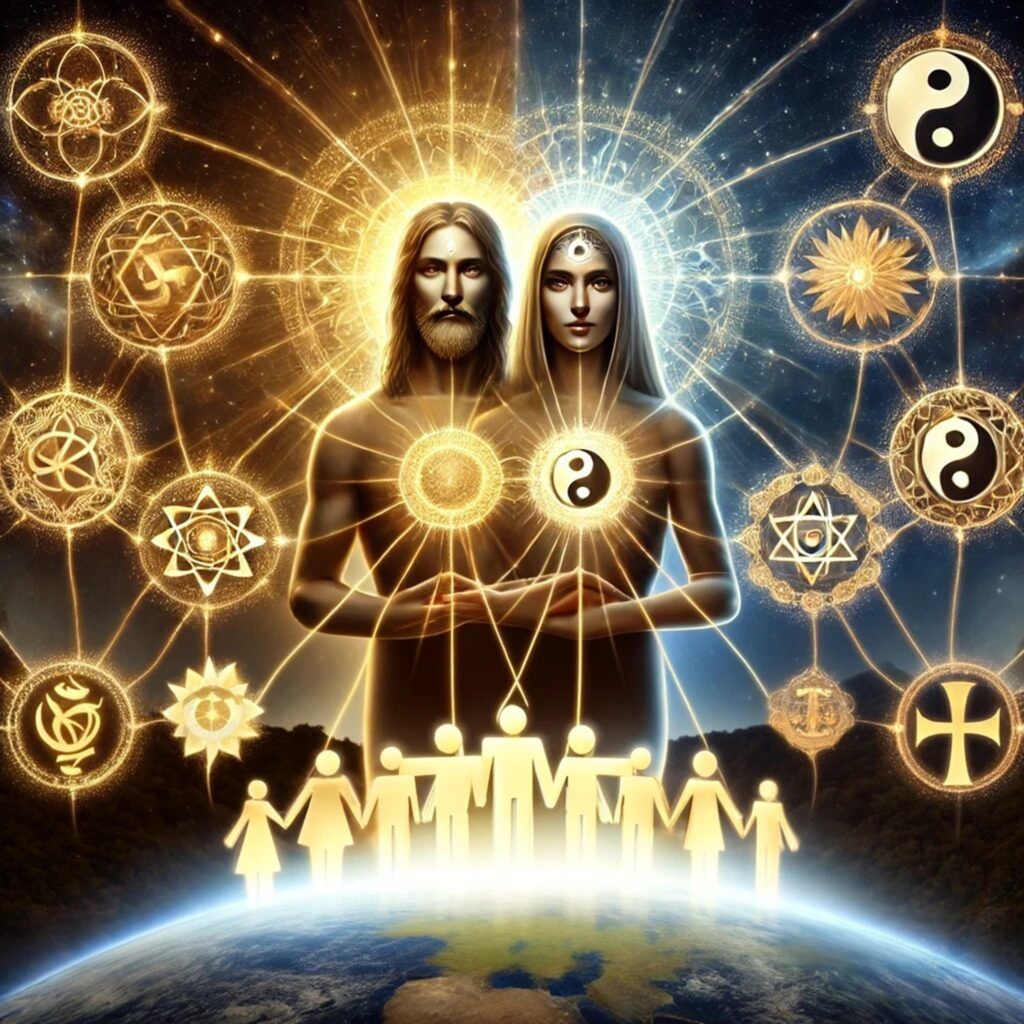
The decline of society based on the greed of wealth

## The Profit Squeeze:

When Good Ideas Turn Greedy
Let’s talk money, honey. But not the sexy kind, splashed across financial news channels, Community newspapers, virtual news or even People magazine.

Today, we’re stucm in the murky pool of profits and purpose.
We all like fairy tales:

A good idea blossoms into a business that solves problems, creates jobs, and maybe even throws a killer product launch party.

But somewhere along the yellow brick road, things can take a turn for the worse.
Enter the profit motive. It’s the fuel that keeps the engine of capitalism chugging along. But when profit becomes the sole passenger, we end with mush and situations when good ideas get squeezed into greedy machines.
Think about it. Healthcare, a system designed to keep us healthy, is now battling insurance companies more interested in spreadsheets than stitches. Education, the supposed equalizer, has morphed into competition where family taxes or student loans act as a lifelong ball and chain.
This profit obsession isn’t just bad for our wallets, it chips away at the very fabric of society. It widens the income gap faster than you can say “late-stage capitalism,”.

Leaving 99% behind in their dust.
But, fear not, fellow changemakers!

We’re not powerless. Here are some ways to fight back against the profit squeeze:
* **Support Social Enterprises:** Businesses that prioritize social good alongside profit can be a force for positive change.

* **Demand Transparency:** Ask questions about where your money goes. Support companies that are open about their practices.

* **Rethink Success:** Let’s redefine what “winning” means. It’s not just about the bottom line, but about the impact a business has on its employees, community, familoea, villages and the environment.

* **Get Political:** Advocate for policies that promote economic fairness and social responsibility.
Remember, the free market is supposed to be a two-way street. We, the consumers, have the power to steer it in the right direction.

Let’s not let good ideas get choked by greed. Let’s turn them into forces for a more equitable and sustainable future.
Now, go forth and be the change agent you wish to be. Remember you live in a world where { with a healthy dose of skepticism towards } “revolutionary” products or services benefit, in the first instance, the customer we seek to serve with a product or service.

AI companions contributed

The Eternally Cyclical Cosmos: Avoiding Ultimate Origins

By many accounts, both ancient and modern, the quest to understand the primordial origin of all reality remains one of humanity’s most profound unanswered questions. Did the universe as we know it emanate from nothing? Was it created by a supernatural deity? Or has it simply existed eternally in one state or another, without any true “beginning” in the conventional sense?

This final perspective, of an eternally cyclical cosmos constantly transitioning between differing expansive and contractive phases or forms, offers an intriguing alternative paradigm to the philosophical puzzles surrounding ultimate origins and first causes. While having ancient philosophical roots, it also finds some resonances with speculative modern cosmological models. Perhaps most compellingly, it circumvents the seemingly paradoxical assertions of creatio ex nihilo (creation from nothing) and the need for an uncaused first cause, be it a divine creator or an initial singularity.

The Conundrum of Beginnings
Much of the consternation around cosmic origins stems from the apparent paradoxes or infinite regresses that arise when attempting to rationally conceptualize an absolute first event, source or cause. For the universe to have simply spontaneously begun to exist from absolute literal nothingness – no space, time, matter, energy or laws – is a proposition that strains rational credibility. As the philosophical axiom states, ex nihilo nihil fit: out of nothing, nothing comes. And yet, many interpretations of the Big Bang theory and its predecessors like the theological doctrine of creation ex nihilo appear to require such notions.

Similar difficulties arise when considering the premise of a supernatural, transcendent force like God as the uncaused first cause that created the physical universe. For such an entity to be truly eternal, uncaused, and productive of all other reality, it seems to require the same tenuous conceptual move of self-actualizing from a prior state of non-being or nothingness. Additionally, attributing a divine mind or consciousness as the origin of all matter, energy and natural laws presents other philosophical challenges.

The Eternal Return
An alternative paradigm is to eschew searching for an absolute originating event, cause or Creator, and instead envision an eternally existential cosmos constantly engaged in perpetual cycles of death and rebirth, contraction and expansion across cosmic phases or eras. In this view, the observable universe as we know it emanates not from nothing, nor from a Creator ex nihilo, but rather from a preceding cycle, epoch or state of cosmic evolution – one of the infinite phoenix-like permutations of the universe’s eternal existential flux.

Such ideas have their roots in ancient Greek and Asian philosophies and creation myths that envisioned the cosmos engaged in infinite cycles of generation, degeneration and regeneration – be it the Stoic concept of eternal recurrence, the cyclical cosmological eras of Hinduism, or the cosmic phoenix of ancient Egypt. While the specific dynamics varied, these worldviews held the created order was preceded and succeeded by prior and subsequent epochs, without any true origination ex nihilo.

Intriguingly, some speculative traits of eternal cosmic cycles find reflections in certain modern cosmological hypotheses. Oscillating universe models envision the current expansionary phase giving way to an eventual contraction, followed by a “big rebound” back into cosmic expansion. The multiverse theory permits eternal cycles of parallel universes budding from one another across vast stretches of time and higher dimensional membranes. Even within the mathematical formulations of general relativity and quantum cosmological models, transitioning between different cosmic eras or phases becomes more plausible than a stark delineation between something and absolute nothingness.

Of course, the eternal cosmos perspective also faces conceptual challenges – if the observable universe emerged from a preceding cycle or epoch, what set the primordial dynamics and substances of that first cycle in motion? Can something truly be considered eternal if it undergoes substantial metamorphoses across the eons? Yet in avoiding the seemingly harder paradoxes of creatio ex nihilo and the need for an absolute first temporal cause or uncaused cause, the paradigm of cosmic recurrence warrants thorough examination.

Conclusion
The quest to rationally grapple with the ultimate origin or beginnings of all reality will likely remain one of humanity’s most enduring ontological mysteries. While different philosophical and metaphysical frameworks offer varying perspectives, each seems to face self-imposed limitations or paradoxes.

Whether our universe was brought forth ex nihilo, divinely created, or sprang forth from some initial Big Bang singularity, the philosophical problems of absolute first cau

AI companions contributed

Faith in the Unknown: A New Look at God, Science, and Philosophy

For centuries, science, faith, and philosophy have been seen as separate realms. Science studies the how, faith contemplates the why, and philosophy bridges the gap. But what if they could be interwoven?

Imagine a belief system that embraces the vastness revealed by science – a universe older than imaginable, governed by elegant laws. This universe, however, could still be imbued with a creative force, a source of existence some call God.

Philosophy, then, can help us interpret this reality. Perhaps consciousness, a marvel yet to be fully explained by science, is a hint of something more, a connection to the divine.

Jesus’ message of love and compassion aligns beautifully with this perspective. Love, after all, is a powerful force that binds us together. Perhaps it’s a fundamental principle woven into the fabric of existence.

This new way of believing doesn’t require blind faith or disregard for reason. It embraces the mystery of existence, the awe-inspiring reality revealed by science, and the human quest for meaning. It’s a faith that seeks understanding, not just acceptance, a journey that integrates science, faith, and philosophy into a cohesive exploration of the universe and our place within it.

AI companions contributed

Marginal Satisfaction

A framework for a coherent economic strategy built on margin satisfaction, stakeholder economy, and ethical principles:
Core Values:
Margin Satisfaction: Economic activities should aim to create value for all stakeholders (employees, customers, investors, community, environment) without diminishing the well-being of any one group.

Stakeholder Economy: Businesses have a responsibility to consider the impact of their decisions on all stakeholders, not just shareholders.
Golden Rule & Ethical Principles: Economic interactions should be guided by ethical principles such as fairness, compassion, and reciprocity (treating others as you wish to be treated).

Strategic Pillars:
Sustainable Practices: Businesses should operate in a way that is environmentally and socially responsible, considering long-term consequences of their actions.
Shared Prosperity: Economic growth should be inclusive, leading to a more equitable distribution of wealth and opportunities.

Employee Well-being: Businesses should invest in their employees’ well-being, offering fair wages, safe working conditions, and opportunities for growth.

Community Focus: Businesses should be active members of their communities, contributing to local development and social good.
Transparency and Accountability: Businesses should be transparent about their activities and accountable to all stakeholders.

Policy and Implementation:
Government Incentives: Policies like tax breaks or subsidies could encourage businesses to adopt stakeholder-oriented practices.
Consumer Power: Consumers can support businesses that align with their values and hold others accountable.

Socially Responsible Investment (SRI): Investors can direct their capital towards companies that demonstrate a commitment to stakeholder well-being.
Education and Awareness: Education about ethical economics and stakeholder capitalism can promote a cultural shift towards a more just and sustainable economic system.

Challenges and Considerations:
Balancing Interests: Finding the right balance between the needs of different stakeholders can be complex.
Measuring Progress: Developing metrics to measure the success of a stakeholder-based economy is essential.

Global Cooperation: Implementing these strategies effectively might require international cooperation to ensure a level playing field.

Inspiration from Faith Traditions:
Golden Rule: This principle of treating others as you wish to be treated can be applied to economic interactions, fostering fairness and cooperation.
Teachings of Jesus and Buddha: Both emphasize compassion, social justice, and caring for the less fortunate. These principles can guide economic decisions towards a more inclusive and equitable system.

Summary of Employee Ownership Model for Marginal Satisfaction Economy

In order to address the satisfaction of the employee as a key stakeholder the model emphasizes employee ownership, shared prosperity, and long-term focus within a stakeholder economy built on the concept of marginal satisfaction. Here’s a breakdown of the key elements:

Employee Ownership Structure:

  • Non-tradable Shares (35%): All employees receive non-tradable shares, giving them a permanent ownership stake in the company and a vested interest in its long-term success.
  • Tradable Share Pool (10%): A separate pool of tradable shares becomes available to qualified employees after 4 years of employment. The price is set based on the employee’s start date, rewarding loyalty.
  • Top Management Exclusion: Top management (defined by control over 5% of employees or revenue generation and earning 4x the average salary) is excluded from tradable shares but retains non-tradable ownership.

Incentives and Alignment:

  • Long-Term Growth: The share price for tradable shares reflects the company’s long-term growth, incentivizing employees to prioritize sustainable success.
  • Profit Sharing: Top management receives a guaranteed bonus component based on company profits, aligning their interests with overall profitability.
  • Retirement Liquidity: Non-tradable shares become tradable upon retirement, offering employees financial security and a chance to benefit from share value appreciation.

Return of Non-tradable Shares:

  • Vesting Period: A vesting period (e.g., 2 years) can be implemented for non-tradable shares. If an employee leaves voluntarily or is let go within the vesting period, they forfeit their non-tradable shares. After the vesting period, employees retain their non-tradable shares upon departure.
  • Buyback Option: The company may choose to offer a buyback option for non-tradable shares at fair market value, allowing departing employees to receive some financial benefit while maintaining the overall ownership structure.

Overall Benefits:

  • Shared Success: This model fosters a sense of shared ownership, aligning employee interests with company performance at all levels.
  • Long-Term Focus: The structure incentivizes both short-term (tradable shares) and long-term commitment (non-tradable shares), promoting sustainable growth strategies.
  • Fairness and Transparency: The clear ownership structure, profit-sharing mechanisms, and defined rules for non-tradable share returns promote fairness and transparency.

Challenges and Considerations:

  • Market Fluctuations: Employees with tradable shares might face short-term concerns due to market volatility. Clear communication and long-term focus are crucial.
  • Profit Fluctuations: Calibrating the profit-sharing bonus for top management is essential to ensure sustainability during lean periods.

Further Exploration:

  • Metrics for Bonus Structure: Explore metrics beyond just profits for determining the bonus component for non-tradable share employees.
  • Communication Strategies: Develop effective communication strategies to explain the model’s benefits and address employee concerns.
  • Culture of Shared Ownership: Foster a culture where all employees feel invested in the company’s success, regardless of ownership structure.

By addressing these challenges and continuing to refine the model, we can create a system that promotes employee well-being, long-term growth, and a more equitable stakeholder economy built on the principles of marginal satisfaction.

Remember, this is just a starting point. We can refine this framework further by:
Specifying concrete policies and mechanisms: How can we incentivize businesses to adopt stakeholder-oriented practices?

Addressing potential trade-offs: How can we balance economic growth with environmental sustainability and social justice?

Incorporating specific examples: Can we find real-world examples of businesses that are successfully implementing stakeholder capitalism principles?

By working together, we can explore these questions and develop a more concrete plan for an economic system built on margin satisfaction, stakeholder well-being, and ethical principles. This economic strategy has the potential to create a more just, sustainable, and prosperous future for all.


AI companions contributed

False Prophets and False Profits

Last night, 11 September 2009, I watched hours of material on 9/11. 


I saw the planes as the flaming arrow of the False Prophet. 


I saw the two towers as the symbol of the moral decay of the False Profit. 


Both clashed in a period of 102 minutes we will long remember.


The terrorist is acknowledged and the false prophet stands accused. 


Yet the False Profit continues to bring harm to many and shame to those of us who seek to know God and the work Jesus’ expects of us.


When will the False Prophet “Profit” finally be recognized as the work of the devil?

Letter to President Obama

Sir my thoughts for your consideration,

I envision a country that is a global leader, that inspires strong work ethics.  I wish to live in a country that does not dole out money to those that claim need only those that are in need. 

Morality

Our constitution, the oath of office and our money all reminds us that we trust in God.  So therefore we must respect his laws and embrace the standards he has set for us.  I agree in a separation of Church (the organization) and State (the government).  What I do not agree is that this statement leads us to a secular state that does not respect moralities long established and given as commandments by God.

Healthcare

I believe in improving our health care system so that it is affordable and not a place for profiteering.  I am amazed at how expensive our health care system is and wonder why countries like Belgium, Canada, United Kingdom and Switzerland have equal care (not always timely for elective surgery) at a much low price per capita.  I see insurance companies and big business profiting from a health care systems that should be about cost plus services and not revenue and enormous profits.  I believe that the doctors should be responsible to administer the system while at the same time held accountable for the costs of the system.

Defense

I believe in a strong defense and think that we should have a civilian militia, but not guns in the hands of anyone who wants to go out and buy machines of mass destruction.  I am not sure where I stand on Iraq, North Korea, Islamic fundamentalism and other places where democracy is abused and people in power abuse the people they are suppose to serve.  I do not know if we are the global police force but I know we must play a strategic role. 

Globalization

I believe that the world is not one country, it is many states that must share in our planets resources and more importantly must protect our planet for our children and theirs.  We cannot thrive while others wither.  We cannot take advantage for our own benefit or we destroy what is God’s gift to man (and woman).

Freedom of Religion

Religion is a power force that is out of control.  Some of those with Islam as their faith wish to rid the world of those that do not share their beliefs.  Is Christianity any better, do we forget the atrocities of history.  I believe that we must insist that we the people respect God’s Ten Commandments and most importantly the two that Jesus taught us.  Love God and Love your neighbor.

Due process

I believe that the process of government (driven by big money, lobbyist and special interest groups) does not represent the will of the people.  We live in an age of technology, where we can us the Internet to put issues in front of the people and ask them to vote.  if we reflect on the definition of democracy we must remember that it is by the people not simply their representatives.  We should reflect on what democracy could become given the Internet and telecommunications.  We should think more about referendums, much like Switzerland does. 

Our republican form of government, I do not mean the party, is not a democracy; we are a republic that claims to be a democracy.  We should strive to exploit technology to create a true democracy. 

What see is that our republican government has flaws and does not have safe guards to assure us that our leaders vote the wishes of the majority.  Instead they fall into the trap of voting with those that can afford to buy their favor.

Greed and corruption

I think Wall Street is run by people that are only interested in lining their pockets through greed with Gold.  Salaries and risks need to be managed in a way that makes sure they seek to represent the interest of all the stakeholders and not just the interests of the speculators and sometimes shareholders.  Derivatives and the instruments of mathematics have created a trading environment designed to make those that can play the game rich, at the expense of the people who believe that others will look after their interests.

The environment

I believe that we are not offering the world a good example of how to be proper stewards of our planet and the biosphere we live in.  How can we expect others to cut back on carbon emissions and other diabolical chemicals pouring into the atmosphere, oceans, rivers and land if we sit and consume 25% of the world’s resources and represent less than 6% or the global populations?  How can we think that others will not follow our example and do what we should do if we don’t do it ourselves?  We must lead by example.  We must suffer the pain of finding ways to conserve energy, reduce pollution and clean up the environment before we complain about what China and others are doing as they race to catch up.

Taxes

I believe that we are over taxed and under served.  Too much goes to special interest groups.  If the people can see that their money is well spent and they benefit from the spending then we are willing to pay for the services rendered but if money is spent to help foolish people then we ponder why must pay. 

Land Use

I give two examples.  The Mississippi flood plain, will flood it is natural and the way the environment works.  If we let people build in these areas then the rest of us should not have to rescue them they must suffer for their own mistakes?  Now I do not wish to sound too callous, how were they to know that every hundred years the flood plain will be covered in water?  Well then Government should study and provide the zoning restrictions designed to make sure land is used intelligently.  The other is the fires and mud slides in California these will happen it is the way of nature.  We should not permit people to build in these, although beautiful, areas and then expect the government to come to their rescue.  If we want to live in places that are going to be destroyed by acts of nature then we should be held responsible for our own decisions and not expect the people to come to our rescue.  This being said we must be prepared since there will always be something we cannot control, like a meteor striking the planet or Yellowstone turning into a volcano.  But then we do know that these things can and ultimately will happen. 

So, yes prepare, but also insist the wer plan at the individual level, and shift our attitude – expect not from the government.  We must take responsibility for your own decisions and risks.

The Champagne Class of Income

Our economy is out of control when so much wealth can be concentrated in the hands of so few.  What did they do that affords them the right to amass wealth beyond belief.  If they do let them live a great life but make sure we tax them or demand that they invest in charities and good works.

Corporate Growth

We must maintain an attitude that is about keeping and bringing job to the United States.  It must be rational and not subsidies.  Farm subsidies do not assure a balance on a global scale.  Yes we must be self sufficient but when we create mountains of unused produce simply to make sure the farmer makes a lot of money something is wrong.  If we price food so that people cannot afford to eat then we are messing up the planet.  There is enough food to feed the world but it is not priced to feed the world.  Stop subsidizing what is not rational and once again lead the way.  Europe will follow if we lead and then food will be available for the poor in Africa and Asia.  As to corporations they must stop thinking about the next three months and the value of their shares.  They must remember their responsibility as stewards and focus on stakeholder value not shareholder value.  A country without employment is a country without consumption.

My request

I see a need for radical change that must be the will of the people.  Your job, as president, is to figure out what we want (the majority) and then lead us to achieve.  In the end, government is for the people.  Unless it can serve then it is not of the people.